A serious quote is not just a total at the bottom of the page.
It should show you what has been included, what has been excluded, where allowances have been used, and which assumptions the price depends on.
The goal is not to create a document that looks thick. The goal is to create one that makes the job more understandable.
On an architect-designed renovation, the quote is also the first real look at how a builder thinks. The care in the document is a fair guide to the care on site.

When Two Quotes Are Far Apart
If two quotes are far apart, do not assume one builder is greedy and the other is generous. Pull them apart.
Check the allowances. Compare the scope notes. Look at what each builder has assumed about demolition, site protection, temporary works, electrical upgrades, joinery details, wet area finishes, painting extent and external works.
Many price gaps come from scope gaps, not margin.
Prime Cost Items and Provisional Sums
Allowances are useful tools, but they need to be understood. A prime cost item is usually an allowance for a product that you will choose later. A provisional sum is typically an allowance for work that cannot yet be fully defined.
Neither is inherently bad. The problem arises when homeowners treat them as fixed costs.
If your quote carries too many allowances, your contract figure may be more fragile than it appears. The builder is telling you, honestly or otherwise, that parts of the job are not fully locked in. That may be unavoidable in some cases, especially on renovation work where hidden conditions can emerge. But it should prompt questions.
What remains unresolved? What information is still needed? How can uncertainty be reduced before you sign?
Comparing Quotes Properly
Do not compare quotes by headline rate, square metre rate or the emotional effect of the bottom line alone. Compare them by completeness.
A slightly higher quote built on better documentation, stronger allowances and clearer administration can be the safer and ultimately cheaper path.
Before you commit, walk the builder through the quote. Ask them to explain the major cost centres in plain language. Make sure you understand what is not included.
If you want to make changes, do it before the contract is formed wherever possible. Late changes are rarely neat or cheap.
The Quote Comparison Checklist
Use these six questions when reviewing competing quotations. They force the comparison away from headline price and back toward scope quality and certainty.
- Is the scope aligned? Are both builders pricing the same rooms, the same structural work and the same finish level?
- How many allowances are included? More prime cost items and provisional sums usually mean more movement later.
- What is excluded? Landscaping, electrical upgrades, joinery details, painting extent and external works are common traps.
- Who is supervising? Confirm whether the person quoting is also the person you will deal with during the build.
- How are variations handled? The process should be written, priced and approved before work proceeds.
- What timeline assumptions sit behind the price? Long lead times, access issues and staged occupancy can change programme and cost.
Ask your questions in writing and keep the answers. Confirm which selections still need to be locked in. Do not use a vague quote as if it were a fixed contract sum.
Contracts and Scope Discipline
By contract time, the broad shape of the project should be settled. This is not the stage for vague intentions like “we will work out the bathroom properly later” or “we might add skylights if there is room in the budget”. Loose scope gets expensive once a price is attached and trades are scheduled.
Read the contract with the same seriousness you bring to the quote. Look for progress claims, construction period, site conditions clauses, variation procedure, prime cost schedules, provisional sums and practical completion wording. If something is not clear, get it clarified before signing.
Before you sign: read inclusions, exclusions and allowances line by line. Reduce the selections still marked as undecided. Choose the quote that best reflects the job you actually want built. Have the builder walk you through the contract before you commit.

Download the Full Renovation Guide
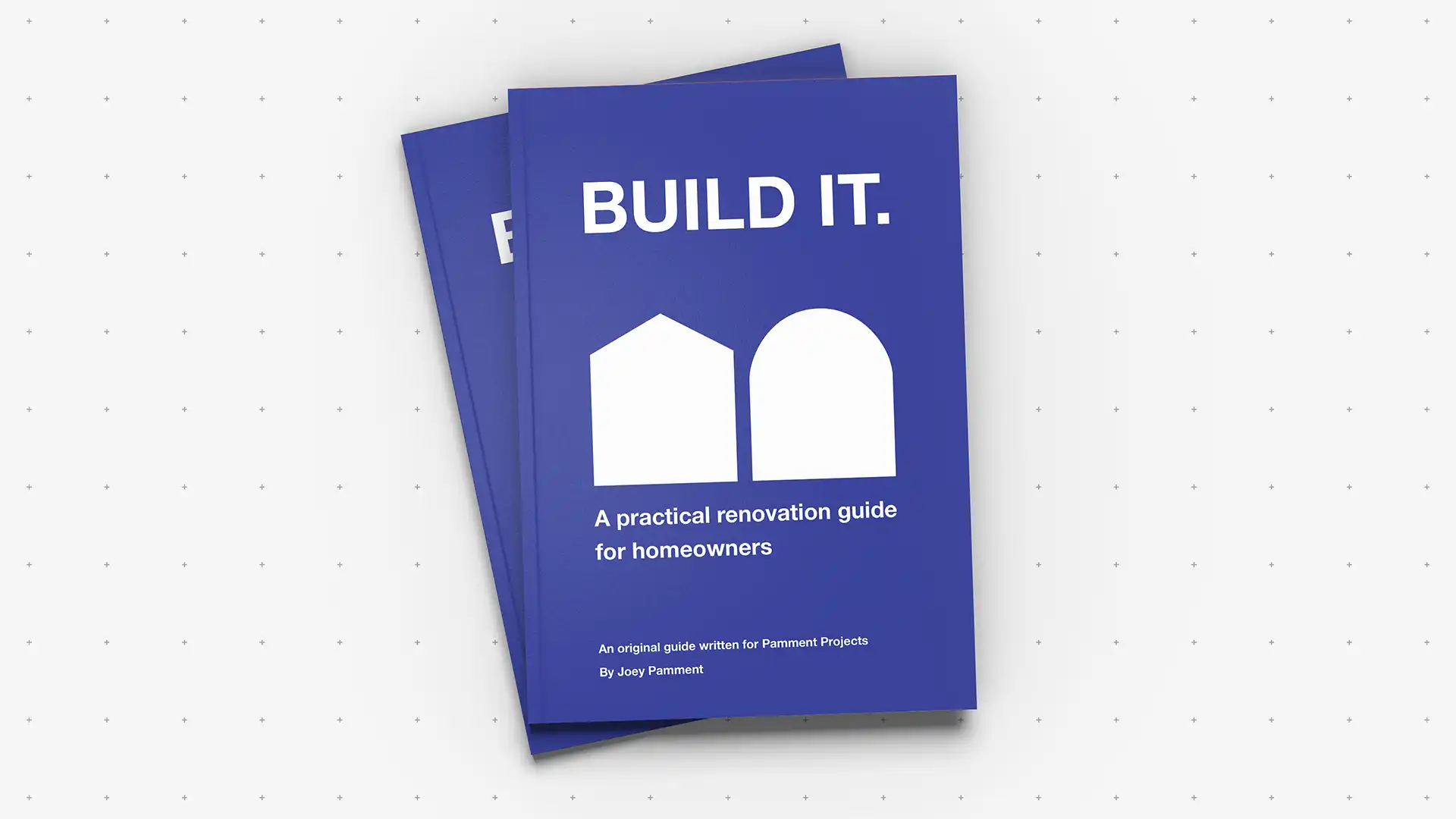
This article is adapted from Joey Pamment’s homeowner renovation guide, Build It. A practical renovation guide for homeowners.
Download the full guide to learn more about planning your renovation, comparing quotes, managing decisions during the build, and finishing the project well.
If you are considering a bespoke renovation or architectural home project in Sydney, we’d be pleased to hear more. After downloading the guide, feel free to get in touch with the team at Pamment Projects to discuss your plans.
Download your free copy
Fill in your details below and we’ll send Build It straight to your inbox.
We respect your privacy. Your details will only be used to send you the guide and follow up if you’d like to discuss your project.